Introduction
Yes, a dirty office can increase your business's liability in a slip-and-fall claim, mainly because visible or recurring hazards make it easier to argue that you knew about a danger and did not deal with it. In Texas, premises liability disputes generally turn on whether the owner or occupier knew, or reasonably should have known, about the condition that caused the fall. Consistent
commercial cleaning
is one of the clearest ways a business can show that it took that responsibility seriously.
This matters for Mansfield business owners because a single fall in a lobby, restroom, or parking area can lead to medical bills, an insurance claim, and a dispute over who should have prevented it. It also matters for homeowners who run a home office, host client visits, or rent out part of a property, since the same questions about notice and upkeep can apply.
This article explains how liability generally works, where hazards tend to hide, what records help, and what common advice leaves out. It is general information, not legal advice. The facts of each case drive the outcome, so a licensed Texas attorney and your insurance agent are the right people for specific questions.
How Premises Liability Applies to an Office
Who Counts as a Visitor
Clients, delivery drivers, job applicants, and vendors are generally treated as invited visitors. Owners and occupiers usually owe them a duty to make the premises reasonably safe or to warn about dangers that are not obvious.
Employees fall under separate workplace safety rules, which overlap with this topic but are not identical.
Actual and Constructive Knowledge
Actual knowledge means someone at the business saw the hazard. Constructive knowledge means the hazard existed long enough that a reasonable owner would have found it. A spill that appeared ten seconds ago is a different situation from a leak that has dripped onto the same tile for two weeks.
Why Cleanliness Becomes Evidence
Cleaning does not decide a case by itself. It becomes evidence. A dirty, cluttered space can suggest that nobody was watching. A well-kept space with a documented routine can suggest the opposite.
How a Dirty Office Creates Legal Exposure
Time on the Floor
The longer a hazard remains, the easier it is to argue that the business should have noticed it. Dirty floors, residue buildup, and neglected restrooms all point toward a pattern of inattention rather than a one-time accident.
Patterns Versus One-Off Events
A single spilled drink is usually seen differently from a recurring problem. If a roof leak, a sweating pipe, or a slick entry has caused trouble before, the business is more likely to be treated as having known about it. Repeated complaints from staff or visitors can strengthen that argument.
Workplace Safety Standards
OSHA's walking-working surfaces standard calls for workplaces to be kept in a clean, orderly, and sanitary condition, with floors dry where feasible. That standard exists to protect employees, and it does not set the rules for visitor claims. Still, a business that ignores it may find the standard cited as evidence of what reasonable upkeep looks like. Check the current text at osha.gov before relying on it.
Where Slip Hazards Hide Inside an Office
Entryways and Lobbies
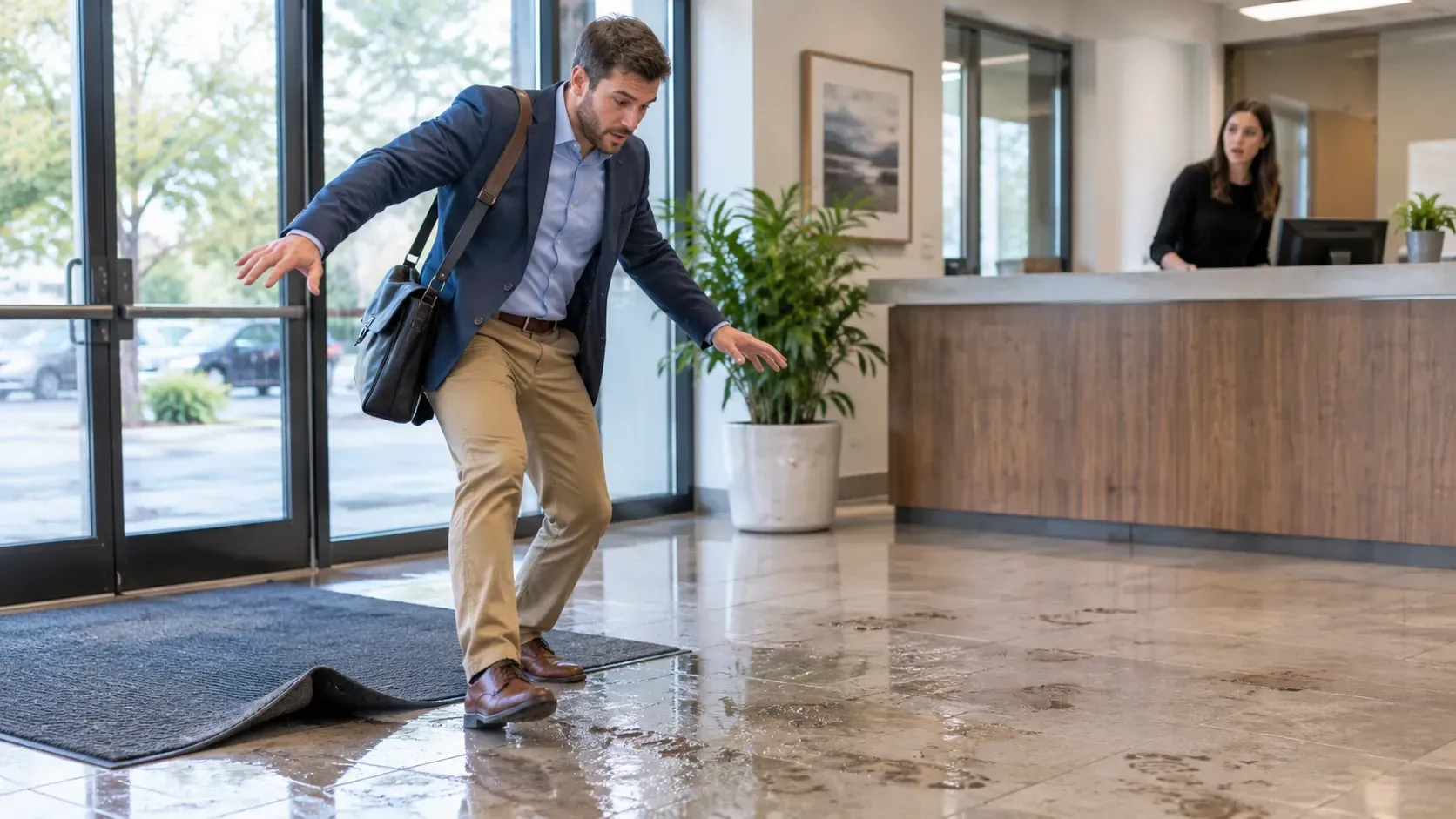
Rain is the most common culprit. Mansfield gets heavy storms that push water through every door, and tile or polished concrete near the entrance can become slick fast. Mats, signage, and frequent checks matter most during wet weather.
Restrooms and Break Rooms
Sinks, ice machines, coffee stations, and refrigerators create small leaks and drips that are easy to miss. These areas also collect soap residue, which can leave floors slippery even when they look clean.
Floors Right After Cleaning
Cleaning itself can create a hazard. A floor mopped with too much water, a wax coat that has not healed, or a wet area with no sign can cause the exact fall the cleaning was meant to prevent. Ask any provider how they mark wet floors and how they handle high-traffic hours.
Clutter, Cords, and Loose Mats
Many claims described as slip-and-fall are actually trips. Loose rugs, curled mat edges, extension cords, and stacked boxes are common causes. They are also easy to fix, which makes them hard to defend when ignored.
Records and Routines That Show Reasonable Care
A Written Cleaning Schedule
A schedule that lists what gets cleaned, how often, and by whom gives the business something concrete to point to. A professional
janitorial service
agreement can serve this purpose, as long as the scope matches how your space is actually used.
Inspection Logs
A short log with the date, time, area checked, and initials takes less than a minute to maintain. Walking the lobby and restrooms at set times each day builds a record that memory cannot match.
Incident and Near-Miss Notes
If someone slips but does not fall, write it down and fix the cause. A documented fix shows that the business responds to problems. An undocumented near-miss that repeats looks very different later.
Photos and Dated Repairs
Photos of repaired leaks, replaced mats, and corrected flooring can help show when and how a hazard was handled.
Exterior Hazards Around Entrances
Algae, Mildew, and Grime on Walkways
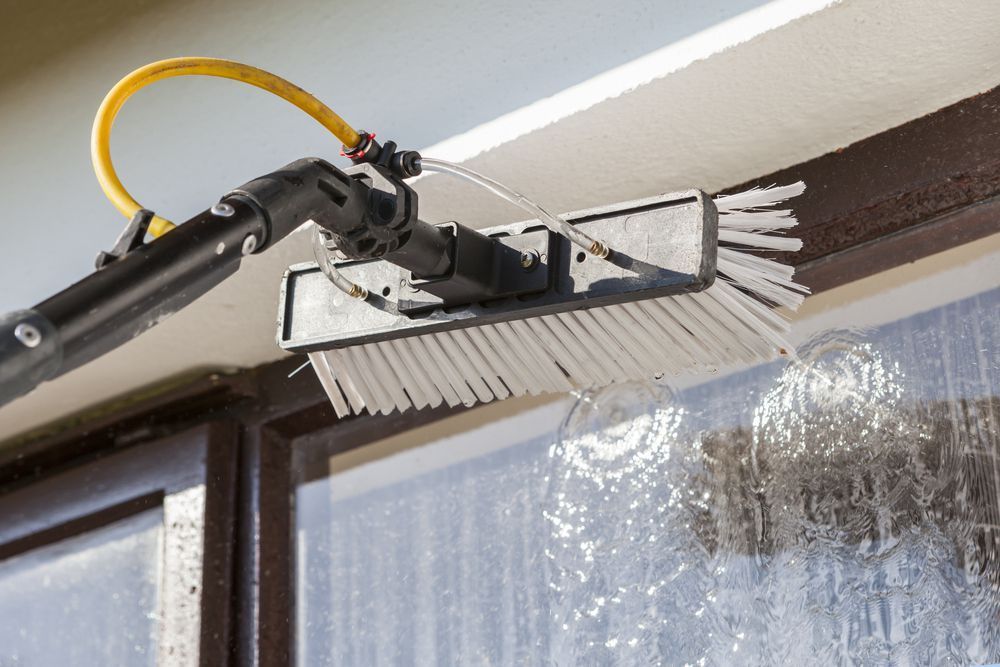
Shaded concrete often grows a thin layer of algae or mildew that becomes very slippery when wet. Regular
pressure washing
of entry walks and covered patios helps remove that film before it turns into a hazard.
Gutters and Drainage Near Doors
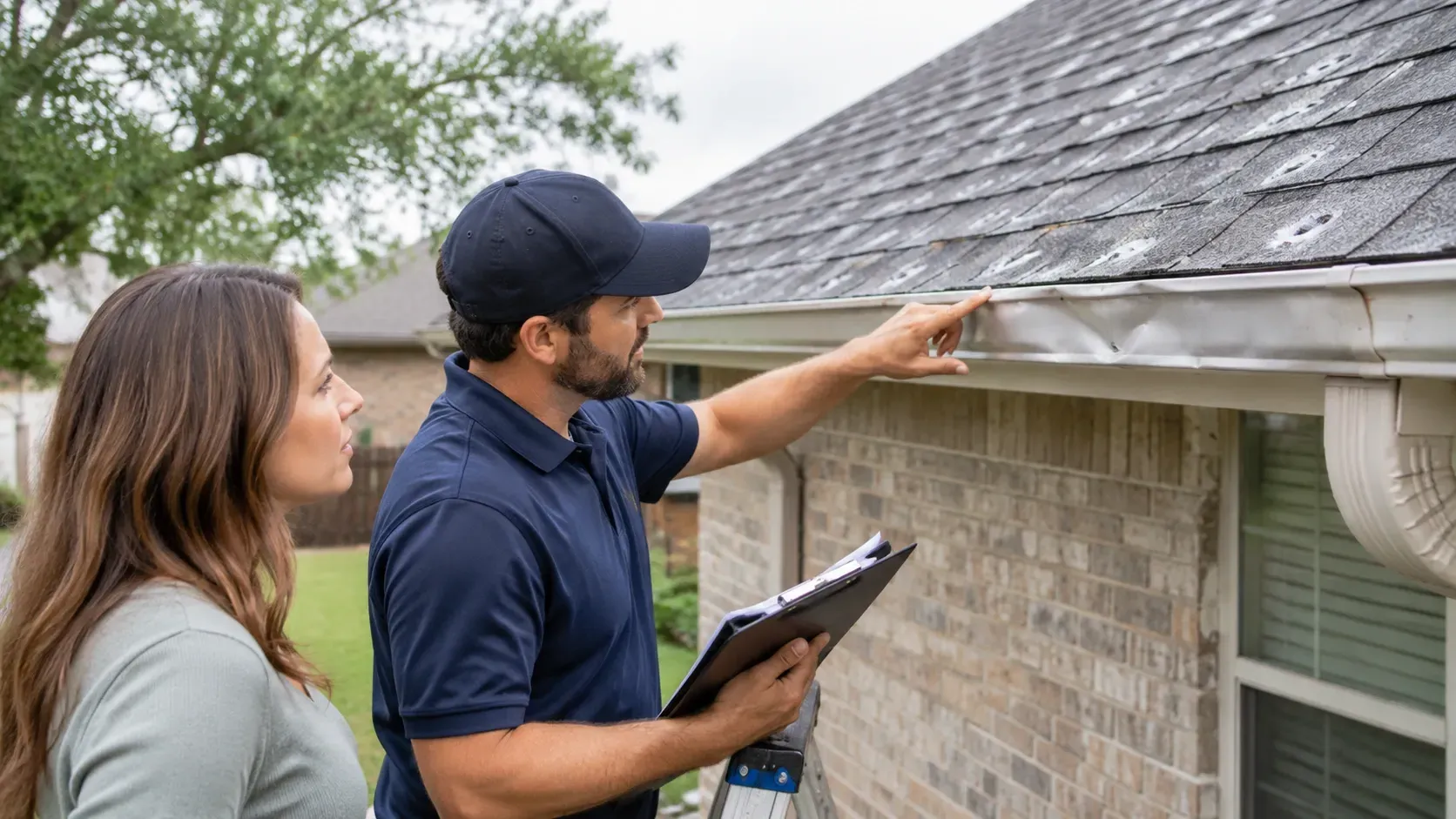
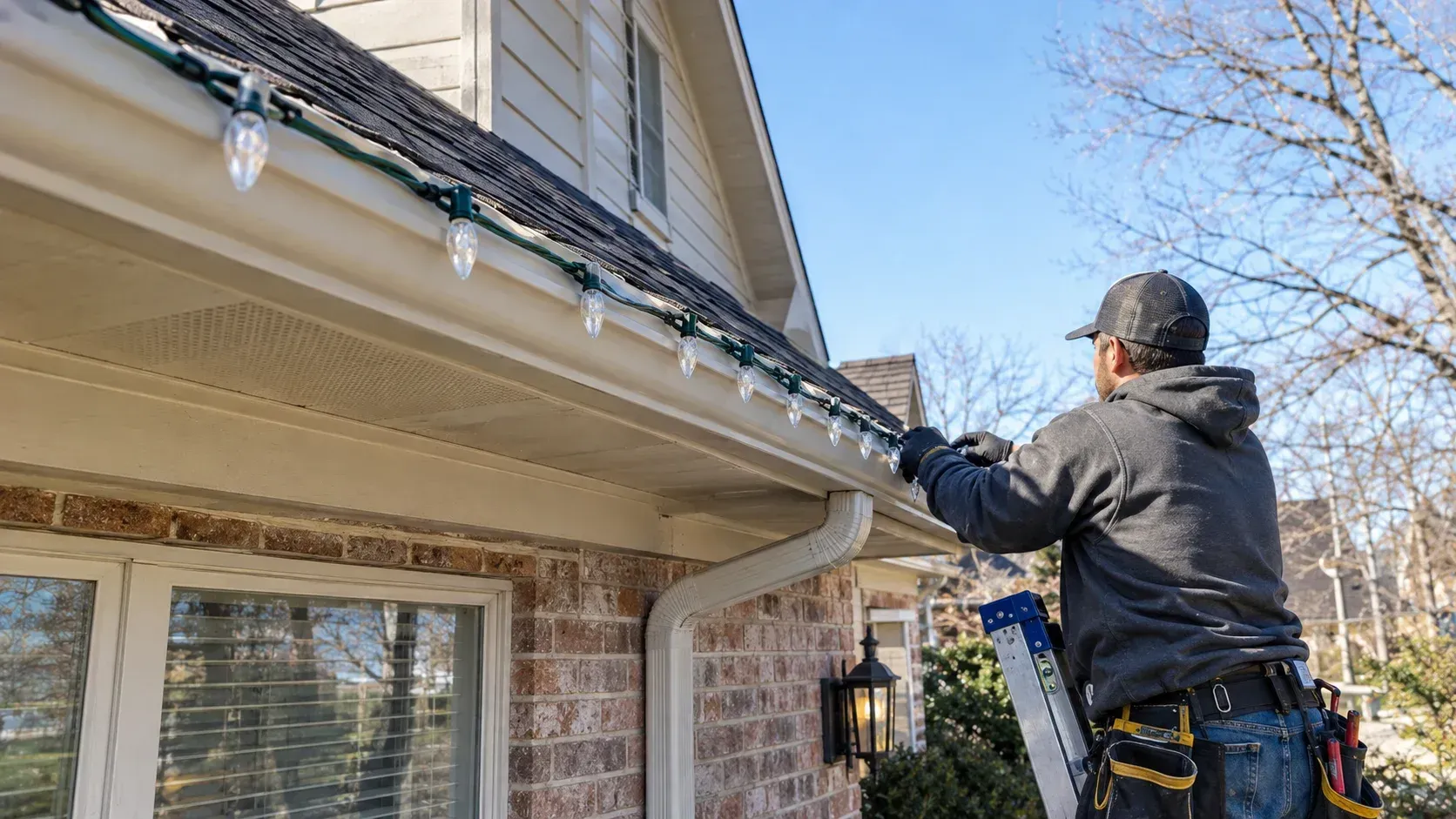
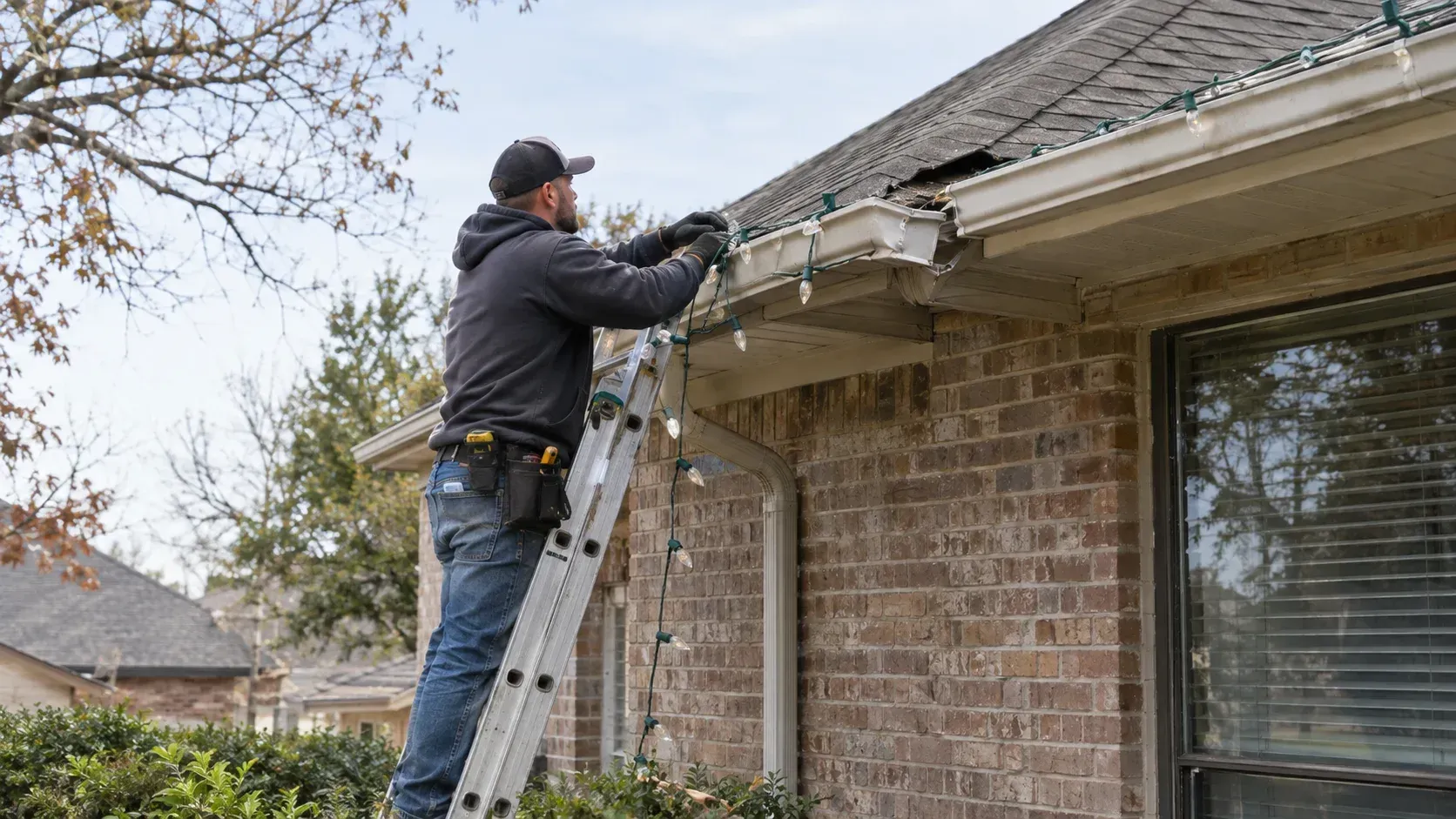
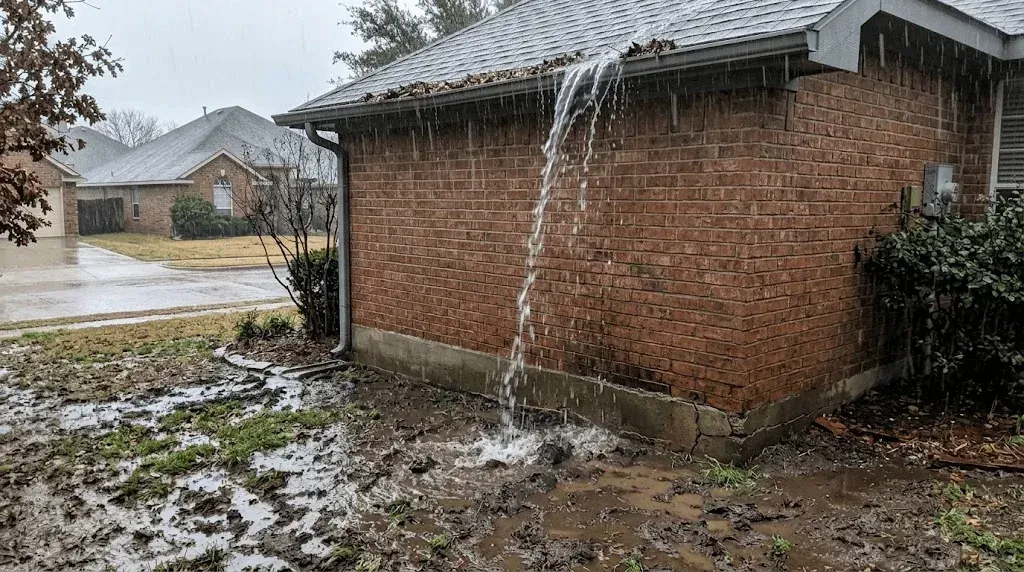
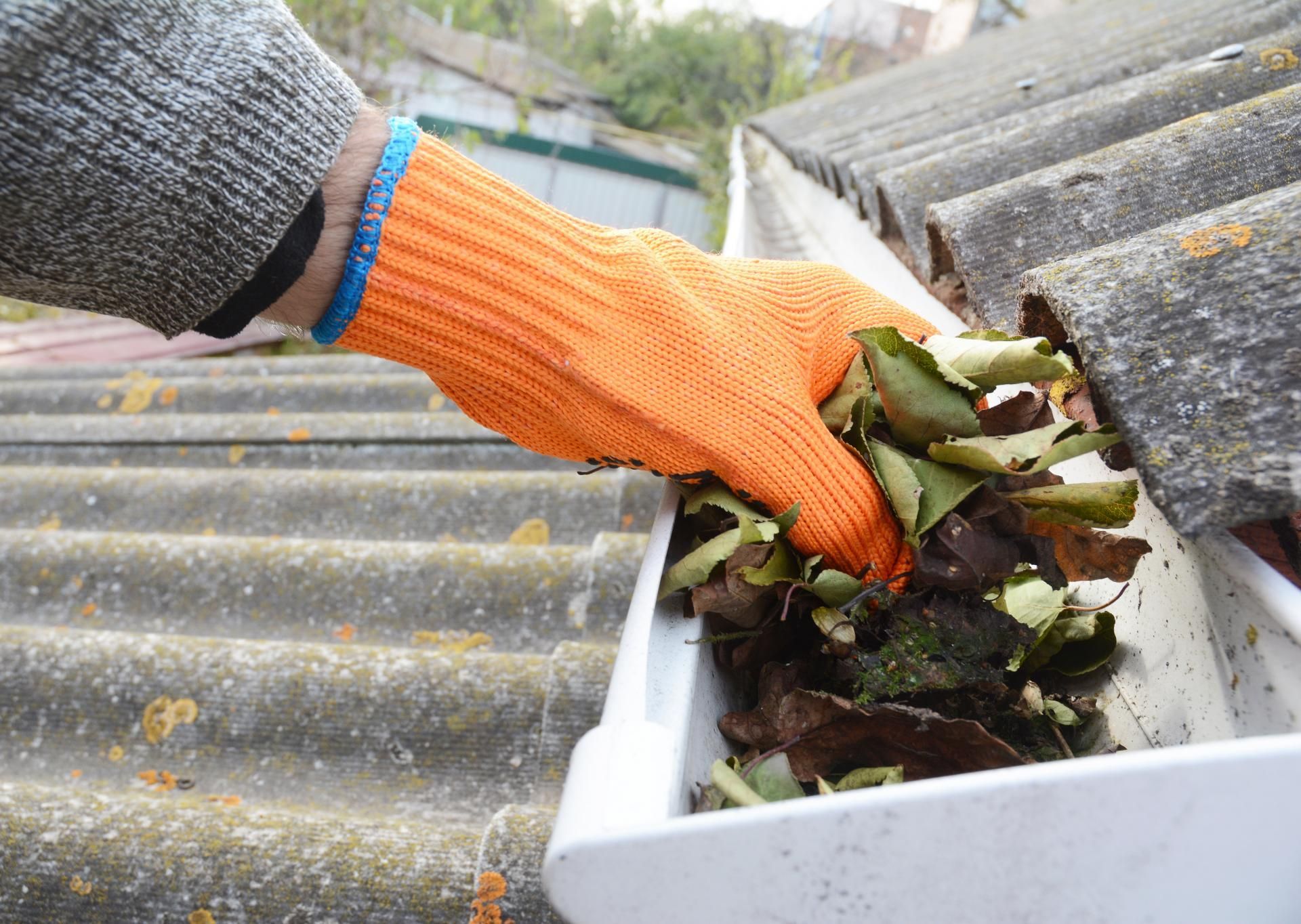
Clogged gutters can overflow directly onto an entrance, leaving a constant wet patch even on days without rain. Routine
gutter cleaning
keeps roof runoff moving through downspouts instead of across the path people walk.
Overgrown Landscaping and Brush
Brush clearing services, usually handled by landscaping or grounds contractors, address a part of the picture that interior cleaning cannot. Overgrown shrubs can drop wet leaves and debris onto walkways, hide uneven pavement, block lighting, and narrow the path to the door. Keeping vegetation cut back from entrances and parking areas reduces both the hazard and the argument that it was obvious.
A Hypothetical Scenario
This is an example, not a real client story. Picture a small professional office in Mansfield with a tile lobby and a shaded front walk. After several rainy weeks, a faint green film has built up on the walk, and the front mat has curled at one corner. Staff have mentioned both issues, but nothing has been fixed.
A visitor slips near the door and is injured. The business has no cleaning schedule, no inspection log, and no repair record. The question becomes whether the owner should have known. Complaints from staff, the visible buildup, and the lack of records all make that question harder to answer in the business's favor.
Now change the facts. The same office has a weekly cleaning schedule, a daily lobby check log, a repaired mat, and a quarterly exterior wash. The accident could still happen, but the business has a much stronger record of reasonable care. The difference is not perfection. It is evidence of attention.
What Online Advice Often Overlooks
Cleaning Can Be the Cause
Many articles treat cleaning only as prevention. In practice, wet floors, slippery finishes, and blocked walkways during cleaning are common sources of falls. Process matters as much as frequency.
Documentation Is Half the Work
Advice often says to keep floors clean without saying how to prove it. A clean office with no records can be hard to defend. A moderately busy office with consistent records is often easier to defend.
Lease Terms Change Who Is Responsible
Tenants and landlords often split duties for common areas, parking lots, and exterior walks. Read your lease before assuming which hazards belong to you.
Homeowners Have Different Coverage
A homeowner running a home business or hosting clients may find that a standard homeowner's policy treats business visitors differently. Ask your insurer directly instead of assuming.
Common Misunderstandings
Belief: A wet floor sign fully protects the business. A sign helps warn visitors, but it does not replace fixing a known leak or removing a hazard that should have been handled. If the sign stays up for days, it can suggest the problem was known and left alone.
Belief: Hiring a cleaning company transfers all liability. Outsourcing can help, but the business that occupies the space usually keeps responsibilities of its own. Contract terms, insurance coverage, and the facts of the fall all matter. Ask for proof of insurance and read the service agreement.
Belief: Only wet floors lead to claims. Trips over cords, curled mats, uneven thresholds, and cluttered aisles are common claim sources as well. Cleaning schedules should include clutter and walkway checks.
A Practical Self-Check
Use this list to review your space once a month:
- Do entrances have clean, flat mats that are replaced when worn?
- Are restrooms and break areas checked on a set schedule?
- Is there a written cleaning schedule that matches how the space is used?
- Does your cleaning provider mark wet floors and avoid peak traffic when possible?
- Are exterior walks free of algae, standing water, and loose debris?
- Are gutters and downspouts directing water away from doors?
- Is landscaping trimmed back from walkways and lighting?
- Do you keep dated notes and photos of repairs?
If several answers are no, the gaps are worth addressing before a problem forces the question.
Conclusion
A dirty office can increase liability in a slip-and-fall claim because it can support the argument that a hazard was known or should have been found. The risk comes less from dirt alone and more from the combination of visible hazards, time, and a lack of records showing reasonable care.
Interior floors, entrances, walkways, drainage, and landscaping all contribute to the same picture. Written schedules, inspection logs, and dated repairs help show what the business did, and careful cleaning methods keep the work from creating new hazards. None of this removes risk entirely, and none of it replaces advice from an attorney or insurance professional about a specific situation.
Questions About Office Slip and Fall Liability in Mansfield?
If you are trying to work out what a reasonable cleaning routine looks like for your Mansfield office, a short conversation can help you sort out where the gaps might be. You can
contact us to talk through your space, your schedule, and what kind of upkeep fits your building.