Can Clogged Gutters Really Cause Foundation Problems in Clay-Soil Areas Like Mansfield?
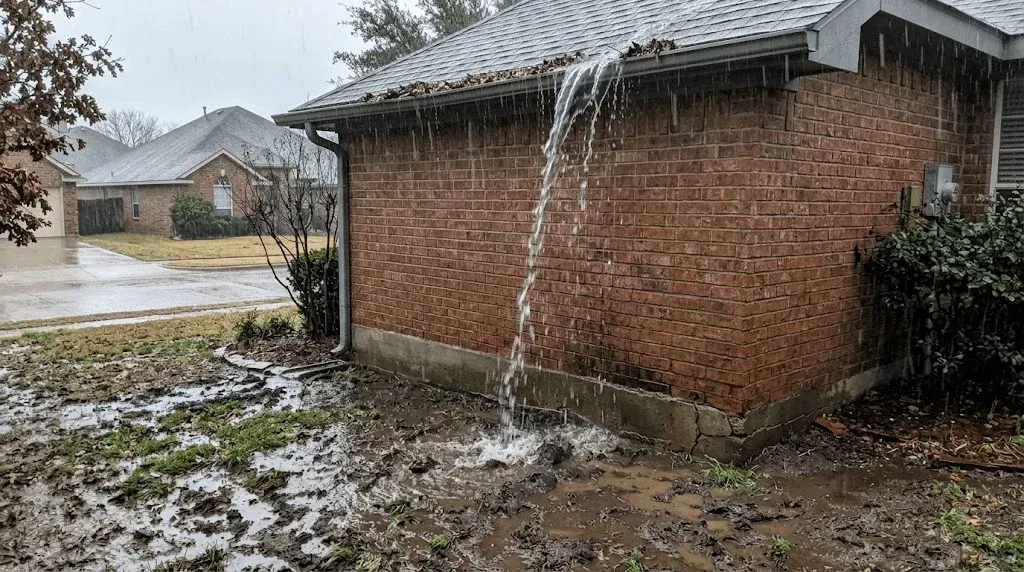
Table of Contents
- Introduction
- How Clogged Gutters Cause Foundation Damage
- Why Clay Soil Foundation Problems Work Differently Here
- What Gutter Overflow Does at the Foundation Line
- Warning Signs to Look for Outside the House
- Warning Signs Inside the House
- Where the Water Goes After It Leaves the Gutter
- What Gutter Maintenance in Mansfield, TX Should Actually Cover
- When the Gutters Themselves Are the Problem
- What We Handle and What Needs a Foundation Specialist
- Conclusion
- Schedule a Fall Gutter Cleaning Before the Winter Rains
- Frequently Asked Questions
Key Takeaways
- Yes, clogged gutters can contribute to foundation problems, and the mechanism is straightforward: water that cannot drain overflows and lands directly against the foundation.
- Expansive clay soil is what makes this matter more in North Texas than it would in sandy soil. Clay swells when saturated and shrinks when it dries, and the movement is what stresses a foundation.
- The damage comes from repetition, not from one storm. Wet, dry, wet, dry across seasons is the cycle that does the work.
- The goal of drainage is not a dry yard. It is consistent soil moisture, which means moving roof water well away from the house rather than letting it concentrate in a few spots.
- Cleaning gutters is preventive maintenance, not a foundation repair. If you already see structural signs, that needs a foundation specialist or structural engineer, not a cleaning crew.
Introduction
Yes, clogged gutters can genuinely contribute to foundation problems, and in clay-soil areas like Mansfield the connection is stronger than most homeowners expect. When gutters fill with leaves and debris, water stops draining through the downspouts and spills over the edge instead, landing in a concentrated line right against the foundation. Expansive clay soil absorbs that water and swells, then shrinks again as it dries out. Repeated enough times, that movement is what shifts and cracks foundations.
We clean a lot of gutters across Mansfield, Grand Prairie and the greater Dallas area every fall, and the houses where this becomes a real problem usually share the same history: gutters that have not been cleared in a couple of seasons, downspouts discharging a foot from the slab, and a flower bed that has been holding water against the house the whole time.
Here is how the mechanism actually works, what to look for, and where the line sits between maintenance and a structural problem.
How Clogged Gutters Cause Foundation Damage
A gutter system has one job, which is to collect the water coming off a large roof surface and move it somewhere harmless. A roof sheds a surprising volume of water in a heavy North Texas storm, and all of it is being funneled toward a handful of downspouts.
When the channel is blocked, that volume does not disappear. It finds the lowest edge and pours over, and the sequence that follows is consistent:
- Water concentrates in a line along the drip edge instead of being carried to a discharge point.
- It lands on the soil immediately against the wall, which is the one place you least want it.
- The soil there saturates deeply, far more than rainfall alone would wet it.
- Clay expands as it takes on water, pressing against and lifting the foundation unevenly.
- The area dries out between rains, the clay shrinks, and support under that section drops away.
- The cycle repeats, and the differential movement between wet and dry zones is what produces cracking.
The important word is differential. A foundation sitting on uniformly moist soil is in far better shape than one where two corners stay soaked and the rest dries out. Concentrated overflow is exactly how you create that unevenness.
Why Clay Soil Foundation Problems Work Differently Here
Plenty of gutter advice online was written for regions with sandy or loamy soil, where water percolates away and the ground barely moves. That advice undersells the stakes in North Texas.
The soils across much of this area are expansive clays, which means they change volume measurably with moisture content. Saturate them and they swell. Let them dry and they contract, which is why you see the ground pull away from foundations and open visible cracks in yards during a dry stretch.
Two consequences follow for homeowners here:
- Moisture consistency matters more than drainage speed. The aim is not to get the yard bone dry. It is to avoid big swings in how wet the soil around the house gets, and to keep those swings even on all sides.
- Slab foundations are sensitive to uneven support. Most homes in this area sit on slabs, and a slab resting on soil that is heaving in one area and settling in another is being asked to bridge a gap it was not designed for.
Add our rainfall pattern, where long dry spells are broken by heavy downpours, and you have close to ideal conditions for the wet-dry cycling that causes trouble. Clogged gutters take that natural cycle and amplify it at the worst possible location.
What Gutter Overflow Does at the Foundation Line
Beyond the soil movement, overflow causes a set of secondary problems at the point where it lands:
- Soil erosion against the wall, which creates a channel that funnels even more water to the same spot next time.
- Negative grade, meaning the soil ends up sloping toward the house rather than away, so all future rain follows the same path.
- Splashback onto siding and brick, which stains surfaces and keeps them damp.
- Water reaching below-grade areas, including crawl spaces where present.
- Mulch and bed soil washed out, so landscaping stops doing its job of holding grade.
- Saturated beds next to the wall, which hold moisture long after the rain has stopped.
- Ice at the edge in a hard freeze, which adds weight to already-loaded gutters.
Drooping gutters that have pulled away from the fascia, water marks streaking down the siding, and debris visible above the gutter line are all signs your gutters need cleaning well before anything structural shows up.
Warning Signs to Look for Outside the House
Walk the perimeter after a decent rain. This is the best time to see what is actually happening, and it costs you ten minutes:
- Water standing against the foundation, or a visible trench line where it has been landing
- Soil that slopes toward the house instead of away from it
- A gap between the soil and the foundation during dry weather
- Eroded or washed-out mulch and bed soil next to the wall
- Water marks or staining on siding and brick below the gutter line
- Gutters sagging, pulling away from the fascia, or visibly full
- Plants growing in the gutters, which means there is enough soil in there to support them
- Downspouts discharging right at the slab rather than away from it
- Cracks in a driveway, patio or walkway near the house
- Doors and gates in exterior fencing that have gone out of square
Warning Signs Inside the House
These matter more, and they are the ones that mean the conversation has moved past gutter cleaning:
- Doors or windows that stick or no longer latch the way they used to
- Cracks in drywall, especially running diagonally from door and window corners
- Gaps opening where walls meet ceilings or floors
- Floors that feel sloped or bouncy, or tile and grout cracking in a line
- Trim and baseboards separating from the wall
- Cracks in brick or mortar outside, particularly stair-step patterns following the mortar joints
If you are seeing several of those together, stop reading about gutters and call a foundation specialist or a structural engineer. Cleaning the gutters at that point is still worth doing, but it is not the fix.
Where the Water Goes After It Leaves the Gutter
This is the part that gets overlooked most often. A perfectly clean gutter that dumps water two feet from the slab has just delivered the problem more efficiently.
What matters after the downspout:
- Discharge distance. The water needs to end up well away from the foundation, not beside it. Splash blocks, downspout extensions and buried drain lines all do this.
- Where it goes next. Discharging onto a spot that drains back toward the house accomplishes nothing.
- Grade around the perimeter. The ground should fall away from the house. Over years, settling and bed work often reverse this without anyone noticing.
- Bed design against the wall. Beds that hold water, or borders that trap it, keep soil next to the foundation wet.
- Irrigation heads near the house, which can undo careful drainage work by soaking the same soil on a timer.
- Downspout count. Too few downspouts for the roof area means each one is handling more water than it can move.
Getting the water off the roof is half the job. Getting it away from the house is the other half.
What Gutter Maintenance in Mansfield, TX Should Actually Cover
A gutter cleaning worth paying for does more than scoop out the troughs. When we are on a roof, the work covers:
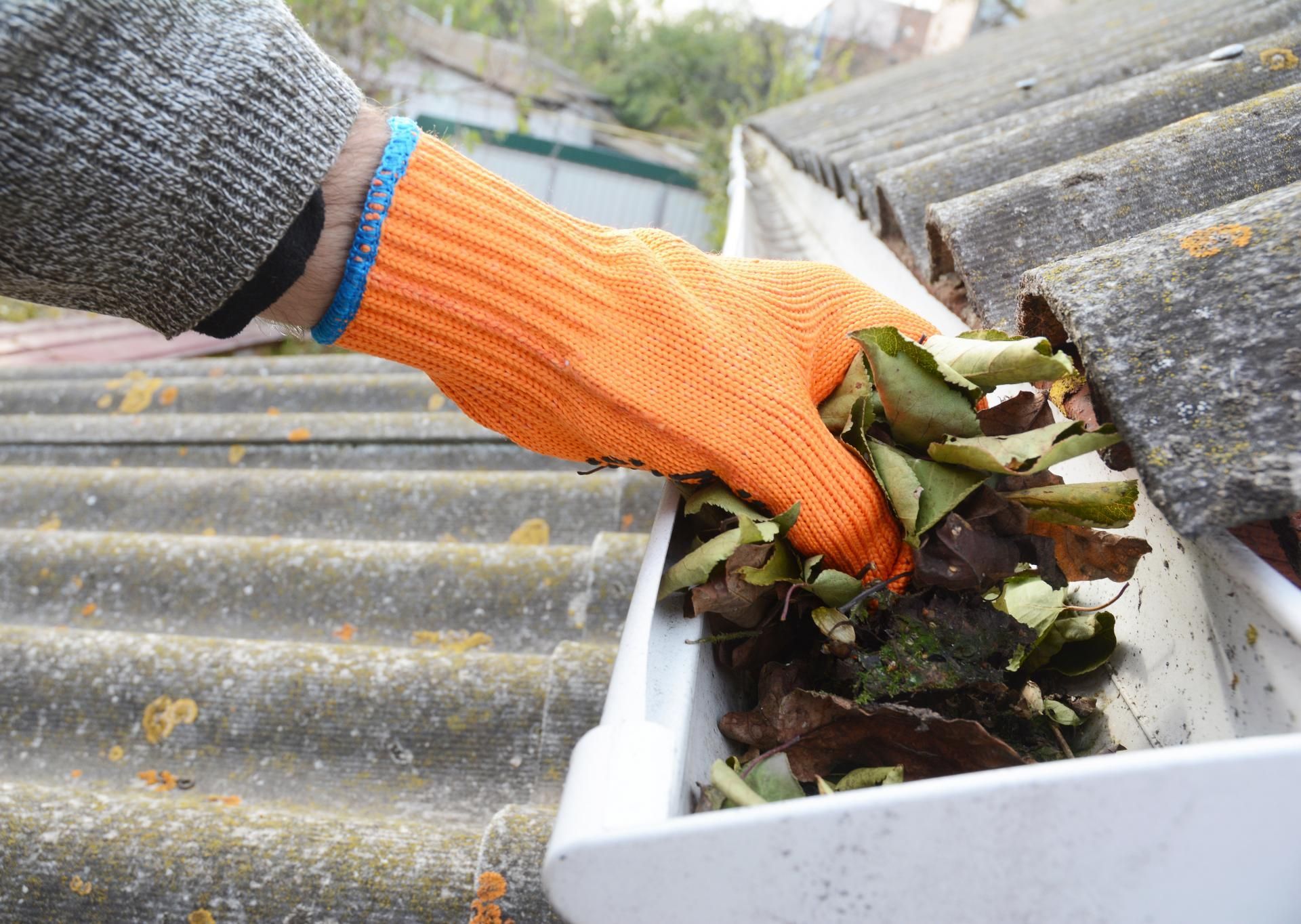
- Clearing the full length of the gutters, not just the accessible runs.
- Flushing and checking the downspouts. Downspouts are like straws, and when they are obstructed nothing passes through. A clear gutter feeding a blocked downspout still overflows.
- Confirming water actually flows to the discharge point rather than assuming it does.
- Checking the hangers and fascia attachment, since debris weight and standing water pull gutters loose.
- Looking for separated seams and leaking joints.
- Noting the discharge point, and telling you if water is being dumped where it should not be.
- Flagging grade and bed problems we can see from the perimeter.
On timing, fall is the obvious window here because that is when the leaves come down and it is ahead of the winter rains. If you have significant tree cover, once a year is often not enough, and the honest test is what the gutters look like rather than what the calendar says.
When the Gutters Themselves Are the Problem
Sometimes cleaning is not the answer because the system was never adequate for the roof. Undersized gutters and too few downspouts overflow even when they are perfectly clear, which is a frustrating thing to discover after paying for a cleaning.
Signs the hardware is the issue include gutters that overflow in heavy rain immediately after being cleaned, sagging between hangers, seams that leak persistently, sectional gutters coming apart at the joints, and long roof runs feeding a single downspout.
A properly sized replacement changes the picture. Robust 5 inch seamless gutters with 3x4 downspouts positioned every 30 linear feet move far more water than an older undersized sectional system, and concrete splash blocks at the discharge points keep that water from simply landing back at the slab. Seamless runs also remove the joints that tend to fail first. Our installations include a two year warranty on craftsmanship and the first gutter cleaning.
What We Handle and What Needs a Foundation Specialist
We want to be clear about this boundary, because it matters.
What we do is cleaning and drainage at the roof line: clearing gutters and downspouts, confirming flow, checking attachment and seams, installing properly sized gutters where the existing ones are not up to the job, and telling you plainly when we see water going somewhere it should not.
What we do not do is assess, diagnose or repair foundations. We are not structural engineers and we will not tell you whether your foundation has moved or what it would take to correct it. If the interior signs above are present, that is a specialist's call.
The useful way to think about it is sequencing. Managing roof water is preventive and comparatively cheap. Foundation repair is neither. Getting the drainage right protects a foundation that is still sound, and it is also something a foundation contractor will tell you to fix regardless, because repairs do not hold if the soil keeps cycling.
Conclusion
Clogged gutters really can contribute to foundation problems, and the path from one to the other is not mysterious. Blocked gutters overflow, the overflow concentrates against the foundation, expansive clay swells and shrinks with that moisture, and the repeated uneven movement stresses the slab.
The fix is unglamorous. Keep the gutters and downspouts clear, make sure the water is carried well away from the house rather than dropped beside it, and keep the grade falling away from the foundation. If you already see doors sticking and diagonal drywall cracks, get a foundation specialist involved, and keep the gutters clear anyway.
Schedule a Fall Gutter Cleaning Before the Winter Rains
If your gutters have not been cleared since last fall, this is the window. Clearing them now means the winter rains actually reach the downspouts instead of the soil against your foundation.
Tucker Pros serves Mansfield, Grand Prairie and the greater Dallas area, and we will tell you what we find on the roof, including when the gutters are undersized rather than just dirty. For a free gutter cleaning quote, call
(214) 680-6059 or book an appointment online.
Frequently Asked Questions
How quickly can clogged gutters actually damage a foundation?
Not from a single storm. The damage comes from repeated wet and dry cycling in clay soil across seasons, so it develops over years. That is also why routine clearing is effective, since it interrupts the cycle before movement accumulates.
Will cleaning my gutters fix foundation cracks I already have?
No. Cleaning addresses the cause of further moisture cycling, but it does not reverse movement that has already happened. Existing structural cracks need assessment by a foundation specialist or structural engineer.
How often should gutters be cleaned in North Texas?
Fall is the priority, ahead of winter rains and after leaves drop. Properties with heavy tree cover often need more than one cleaning a year. Judge it by what the gutters actually look like rather than by a fixed schedule.
How far from the house should downspouts discharge?
Farther than most are set up to. The goal is getting roof water well clear of the foundation rather than beside it, using extensions, splash blocks or buried lines. The right distance depends on your grade, so it is worth looking at on site.
Can gutters overflow even when they are clean?
Yes, and it is common. Undersized gutters, too few downspouts for the roof area, sagging runs and failed seams all cause overflow regardless of debris. If yours overflow right after a cleaning, the hardware is the problem.
Recent Posts