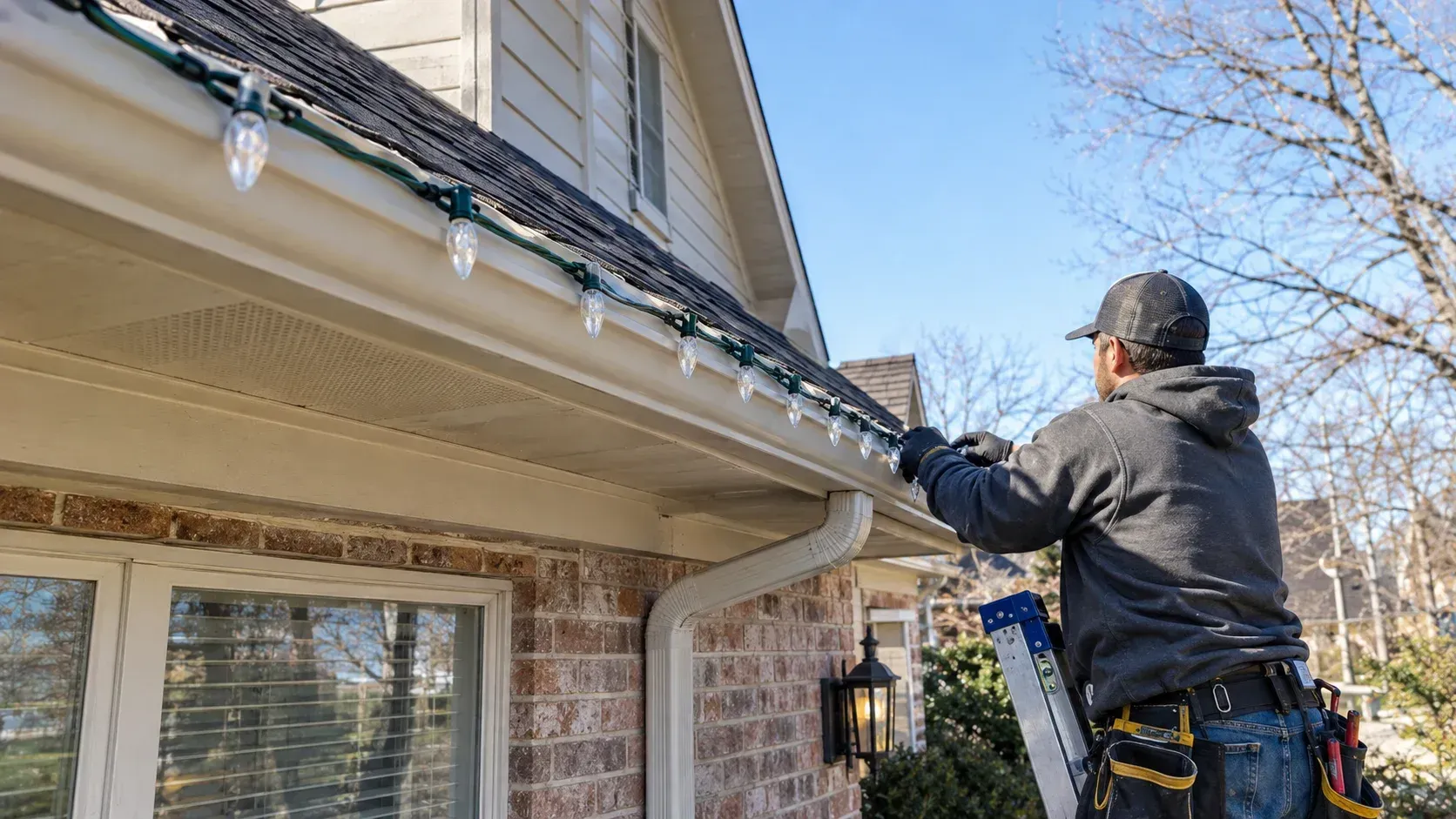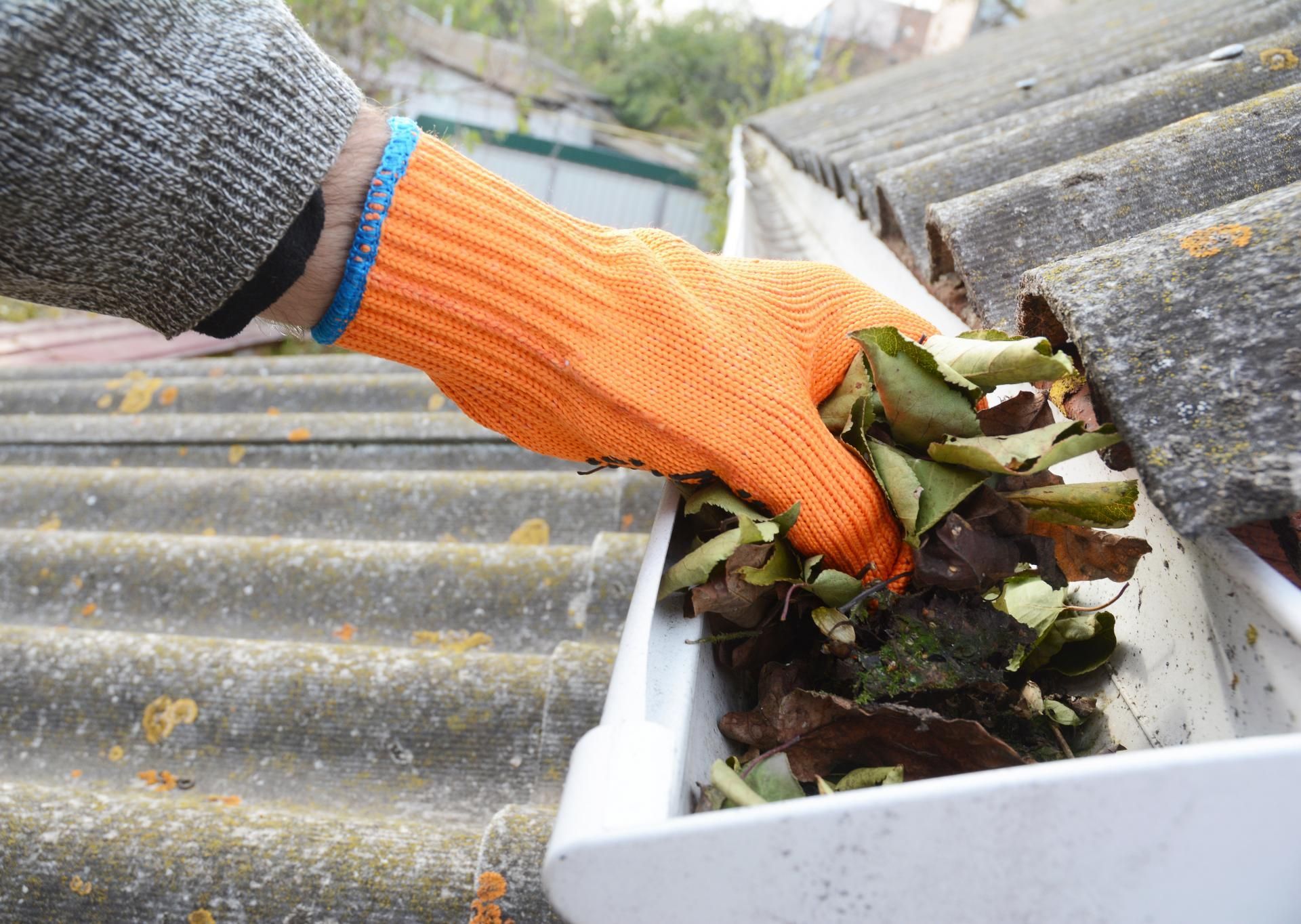
What Happens If Christmas Light Installation Damages Your Roof or Gutters?
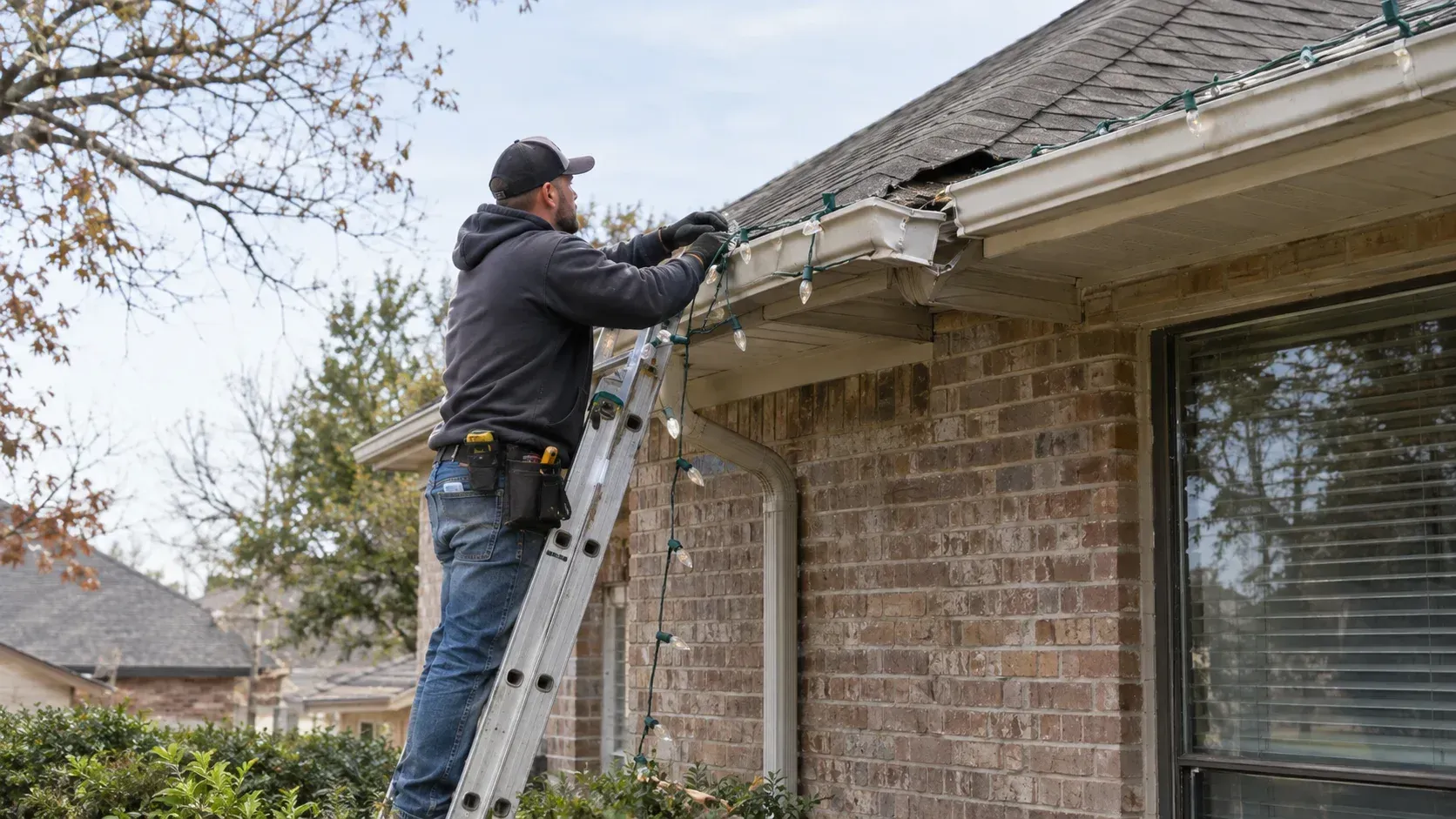
Key Takeaways
- Improper Christmas light installation can puncture shingles, bend gutters, and create entry points for water damage
- Common damage includes loosened shingles, cracked gutters, damaged fascia boards, and compromised roof sealant
- Most roof and gutter damage from light installation is preventable through proper clip systems and installation techniques
- Homeowners should document existing roof and gutter conditions before installation begins to establish a damage baseline
- Professional installation reduces risk significantly compared to DIY methods that often rely on nails, staples, or excessive force
Table of Contents
- Introduction
- How Christmas Lights Typically Get Attached to Roofs
- Common Types of Roof Damage From Light Installation
- Common Types of Gutter Damage From Light Installation
- Why Shingles Are Particularly Vulnerable
- The Hidden Risk of Water Intrusion
- DIY Installation Versus Professional Installation
- What to Do If You Notice Damage
- Preventing Damage Before Installation Begins
- What Typical Holiday Lighting Advice Overlooks
- Conclusion
- Frequently Asked Questions
Introduction
Christmas light installation can damage your roof or gutters when attachment methods puncture shingles, bend gutter channels, or create stress points that lead to water intrusion over time. Professional Christmas light installation typically uses clip-based systems designed to avoid this damage, but DIY installation using nails, staples, or excessive force frequently causes problems that aren't visible until months later. Homeowners in Mansfield, Grand Prairie, and the Greater Dallas area who climb onto their roofs each December to string up holiday lights often don't realize that improper technique can compromise their roofing system.
The damage from poor light installation isn't always dramatic. Sometimes it's a single bent gutter bracket. Sometimes it's a small puncture in a shingle that seems insignificant at the time. But these small issues can develop into larger problems, including water leaks, gutter separation, and shingle failure, especially after repeated installation and removal cycles year after year.
Understanding what causes this damage, how to recognize it, and how to prevent it helps protect one of your home's most important systems during a season meant for celebration, not costly repairs.
How Christmas Lights Typically Get Attached to Roofs
Clip-Based Attachment Systems
Quality light installation typically uses plastic or metal clips designed specifically for gutters, shingles, or roof edges. These clips hook onto existing roof features without penetrating the surface. Gutter clips hook onto the gutter lip. Shingle clips slide under the shingle tab without creating holes. This approach is designed to leave no lasting marks on the roofing system.
Nail and Staple Methods
Many DIY installations rely on nails, staples, or screws driven directly into shingles or fascia boards. This method is faster and requires no special equipment, which makes it tempting for homeowners working without professional tools. However, every nail or staple creates a small hole. Over a roof's lifetime, with repeated installation seasons, these holes accumulate and create potential water entry points.
Adhesive-Based Methods
Some installations use adhesive hooks or tape designed to stick to roofing or gutter surfaces. While these avoid punctures, adhesive can damage shingle granules when removed, particularly in cold weather when shingles become brittle. Adhesive residue can also attract dirt and debris over time.
Common Types of Roof Damage From Light Installation
Shingle Granule Loss
Asphalt shingles are covered in protective granules that shield the underlying material from UV damage and weather. Walking on the roof during installation, along with pulling tape or adhesive hooks, can dislodge these granules. Granule loss accelerates shingle aging and reduces the roof's protective capacity.
Cracked or Lifted Shingles
Cold weather makes asphalt shingles brittle and less flexible. Installing or removing clips, or walking across the roof surface during December temperatures, can crack shingles that would bend without breaking in warmer conditions. Lifted shingle edges create openings where wind-driven rain can penetrate.
Puncture Holes From Nails or Staples
Nails and staples driven through shingles create direct puncture points. Water can enter through these holes during rain, especially if the puncture isn't properly sealed. Over time, water intrusion through these small holes can lead to wood rot in the roof decking below.
Fascia Board Damage
The fascia board, which runs along the roof edge behind the gutters, is a common attachment point for light clips and nails. Repeated use of nails or screws in fascia boards weakens the wood and can create splits or cracks, especially in areas with freeze-thaw cycles.
Common Types of Gutter Damage From Light Installation
Bent or Dented Gutter Channels
Gutter clips that are too tight, improperly sized, or forced onto gutters can bend the metal or vinyl channel. This changes the gutter's shape and can affect how water flows through the system, potentially creating areas where water pools instead of draining properly.
Cracked Gutter Material
Vinyl gutters become brittle in cold weather, similar to shingles. Clips attached with excessive force can crack the gutter material, particularly at corners or seams where the material is already under stress.
Separated Gutter Hangers
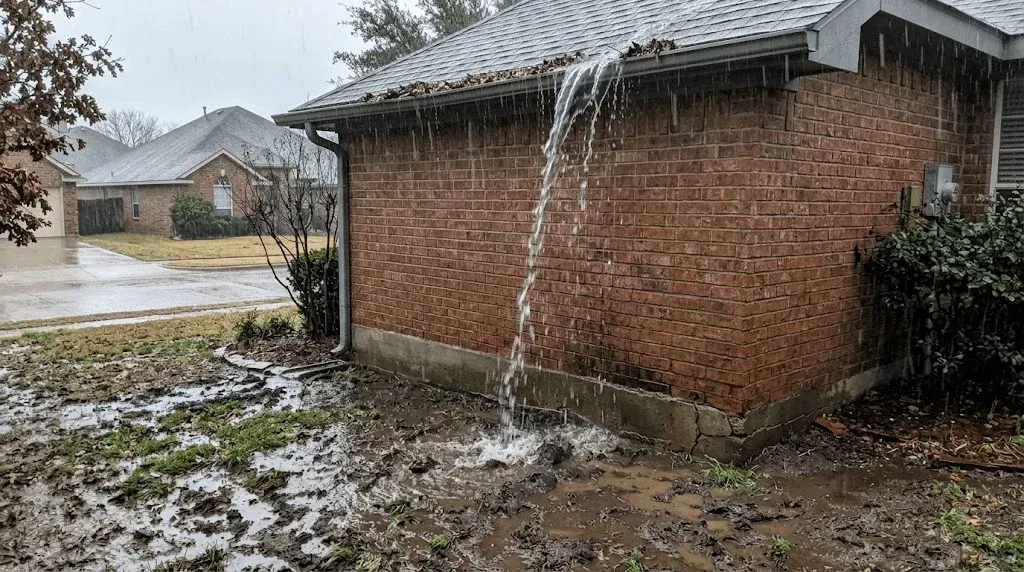
Gutters are held in place by hangers attached to the fascia board. Additional weight and stress from light strands, combined with wind during winter storms, can pull hangers loose. This creates sagging sections where water doesn't drain properly.
Loosened Downspout Connections
Light strands sometimes get wrapped around or attached near downspout connections. The added weight and movement from wind can loosen these connections over a holiday season, leading to water leaking at joints rather than flowing through the downspout as designed.
Why Shingles Are Particularly Vulnerable
Asphalt shingles, the most common roofing material in Mansfield and throughout North Texas, have specific vulnerabilities during winter installation work.
Cold temperatures reduce shingle flexibility significantly. At temperatures below 40 degrees Fahrenheit, asphalt shingles can become stiff and prone to cracking under pressure that wouldn't cause damage in summer conditions. December installation work in North Texas often occurs during these cooler temperature windows, even though the region doesn't experience extreme cold compared to northern states.
Foot traffic on shingles during installation adds another risk factor. Walking directly on shingles, particularly repeatedly during installation and later removal, can crack brittle shingles or dislodge granules. Professional installers typically use ladder stabilizers and standoffs to minimize direct roof walking.
Age also matters significantly. Older shingles, already somewhat brittle from UV exposure and weathering, are more susceptible to cracking from clip pressure or foot traffic than newer shingles. A roof approaching the end of its expected lifespan faces higher risk from light installation activities.
The Hidden Risk of Water Intrusion
Why Small Damage Becomes Big Problems
The most significant risk from Christmas light installation damage isn't the immediate visible harm. It's the water intrusion that develops afterward. A small puncture hole, crack, or lifted shingle edge might seem cosmetically insignificant. But these openings allow water to enter during rain events throughout the following months.
The Progression of Water Damage
Water that enters through a small roof puncture typically travels along the roof decking before finding a path downward. This means the eventual sign of damage, such as a ceiling stain or wet insulation, often appears far from the original puncture point. By the time interior damage is visible, the problem may have been developing for weeks or months.
Freeze-Thaw Complications
North Texas experiences periodic freeze-thaw cycles during winter months. Water that enters a small crack or puncture can freeze, expand, and widen the damage. This cycle repeats with each freeze event, gradually enlarging small damage into more significant structural concerns.
DIY Installation Versus Professional Installation
Equipment Differences
Professional installation typically uses specialized clip systems, ladder stabilizers, and roof-safe walking techniques. DIY installation often relies on whatever materials are readily available, including hardware store nails, staples, or generic adhesive hooks not designed specifically for roofing materials.
Experience and Technique
Professional installers understand which areas of a roof can bear foot traffic safely and which cannot. They know how much tension is appropriate for clips and how to route light strands to minimize stress on gutters and fascia boards. DIY installation often lacks this specific knowledge, leading to technique choices that seem reasonable but create unnecessary stress on roofing materials.
Insurance and Liability Considerations
Professional installation companies typically carry insurance that covers damage that might occur during installation. DIY installation leaves homeowners responsible for any damage that occurs, whether from the installation process itself or from falls and accidents during the work.
Time and Convenience Factors
Professional gutter cleaning combined with light installation can address multiple maintenance needs in a single visit, which some homeowners find more efficient than handling installation themselves and separately scheduling other exterior maintenance.
What to Do If You Notice Damage
Document the Damage
Take photos of any visible damage as soon as you notice it. Include wide shots showing the damage location relative to the roof or gutter system, along with close-up photos showing the specific damage type. This documentation helps if you need to discuss repair options or installation accountability.
Assess the Severity
Minor cosmetic damage, such as small granule loss without exposed material underneath, may not require immediate repair. However, any puncture holes, cracks, or separated gutter sections should be addressed promptly to prevent water intrusion before the next rain event.
Schedule Timely Repairs
Roof and gutter damage tends to worsen over time, particularly with exposure to additional weather events. Addressing damage promptly, rather than waiting until a more convenient time, typically results in smaller repair scope and lower costs.
Consider Professional Assessment
If you're uncertain about damage severity or repair needs, professional roof and gutter assessment provides clarity. Specialists can identify whether damage is purely cosmetic or represents a genuine risk to your roofing system's water resistance.
Preventing Damage Before Installation Begins
Choose Appropriate Attachment Methods
Clip-based systems designed specifically for your gutter type and shingle style minimize puncture and stress risks compared to nails, staples, or generic adhesive products.
Inspect Existing Conditions First
Before installation begins, walk around your home and note the current condition of your roof edges, gutters, and fascia boards. This baseline assessment helps you identify any new damage that occurs during installation versus pre-existing wear.
Avoid Installation During Extreme Temperatures
When possible, schedule installation during milder temperature windows rather than the coldest days of the season. This reduces shingle brittleness and the associated cracking risk.
Remove Lights Properly at Season's End
Damage often occurs during removal as much as installation, particularly when light strands have become tangled with gutters or roof features over the holiday season. Careful, methodical removal reduces the risk of damage during this often-overlooked phase.
Consider Professional Installation
Professional installation services typically carry the knowledge and equipment to minimize damage risk significantly compared to DIY approaches, particularly for homeowners without roofing experience or appropriate safety equipment.
What Typical Holiday Lighting Advice Overlooks
Most online guidance about Christmas light installation focuses on aesthetic placement and electrical safety, while overlooking structural considerations that matter significantly for long-term roof and gutter health.
Standard advice rarely addresses cumulative damage. Articles typically discuss single-season installation without acknowledging that minor damage compounds across multiple years. A small puncture that seems insignificant in year one can combine with similar punctures in years two and three to create meaningful water intrusion risk.
Standard advice underestimates cold-weather material changes. Generic lighting guides don't typically address how temperature affects shingle and gutter material flexibility, leading homeowners to use techniques that would be safe in summer but risky in December conditions.
Standard advice doesn't address removal risks adequately. Most guidance focuses heavily on installation technique while treating removal as an afterthought, despite removal representing significant damage risk, particularly when light strands have shifted or become entangled during the season.
Standard advice doesn't discuss insurance and liability clearly. Homeowners attempting DIY installation often don't consider that any resulting damage, along with any injury from falls, becomes their financial responsibility without the insurance coverage that professional installation typically includes.
Conclusion
Christmas light installation can damage your roof and gutters when attachment methods create punctures, excessive stress, or material fatigue that compromises your home's water resistance systems. The risk comes primarily from nail and staple-based attachment methods, cold-weather material brittleness, and foot traffic during installation and removal phases. Most of this damage is preventable through proper clip-based attachment systems, careful technique, and attention to seasonal temperature conditions.
For homeowners in Mansfield, Grand Prairie, and Greater Dallas, understanding these risks helps you make informed decisions about holiday decorating approaches. Whether you choose DIY installation with proper equipment and technique, or professional installation services that carry specialized knowledge and insurance coverage, recognizing the connection between installation method and long-term roof health protects your home while still allowing you to enjoy festive holiday lighting.
Small investments in proper attachment systems and careful technique protect against the larger repair costs that can develop from water intrusion issues discovered months after a damaged installation.
Questions About Protecting Your Roof This Holiday Season?
If you're planning Christmas light installation and want to understand your options for protecting your roof and gutters during the process, professional guidance can help clarify what approaches work best for your specific roofing and gutter system.
If you'd like to discuss installation options, ask about damage prevention techniques, or if you'd like to
contact us
about scheduling professional Christmas light installation that minimizes risk to your roof and gutters, we're happy to answer your questions and help you plan for the season ahead.
Frequently Asked Questions
Can I tell if my roof was damaged during light installation right away?
Not always. Punctures and cracks may not be visible from the ground, and water intrusion symptoms often don't appear until after rain events weeks or months later. Inspecting your roof edges and gutters closely after installation and removal helps catch issues earlier.
Are vinyl gutters more prone to damage than metal gutters during installation?
Vinyl gutters tend to become more brittle in cold weather than aluminum gutters, making them somewhat more susceptible to cracking from clip pressure during winter installation. However, both materials can be damaged by excessive force or improper attachment methods.
Does homeowners insurance typically cover damage from Christmas light installation?
Coverage varies by policy and depends on whether the damage resulted from a covered peril or simply installation technique. Many policies don't cover damage from installation methods homeowners chose themselves. Reviewing your specific policy or asking your insurance agent provides clarity for your situation.
How much does it typically cost to repair gutter damage from light installation?
Minor gutter damage like small dents might cost $50-150 to repair, while more significant damage like separated hangers or cracked sections can range from $200-500 per affected area, depending on material and accessibility.
Should I remove Christmas lights immediately after the holidays to prevent damage?
Waiting too long can increase risk from additional weather exposure and wind stress on light strands. Removing lights within a few weeks after the holiday season, using careful technique rather than rushing, generally minimizes both installation-season and removal-related damage risk.
Recent Posts