Why Do Professionally Installed Christmas Lights Stay Taut While DIY Strands Sag by January?
Key Takeaways
- Professionally installed Christmas lights stay taut because installers use tensioning techniques, proper spacing, and material-specific attachment methods that DIY installation typically skips
- Temperature changes throughout the holiday season cause both wire and plastic clips to expand and contract, which professional installation accounts for but DIY methods often don't
- Sagging DIY strands usually result from insufficient attachment points, incorrect clip types, or wire stretched too far between fastening locations
- The physics behind light strand tension involves weight distribution, material flexibility, and attachment point frequency, all of which professional installers calculate before starting work
- Addressing sag early prevents compounding problems like strand disconnection, bulb damage, and increased replacement costs later in the season
Table of Contents
- Introduction
- The Physics Behind Why Lights Sag
- How Professional Installation Addresses Tension
- Common DIY Installation Mistakes That Cause Sagging
- The Role of Temperature in Strand Behavior
- Material Differences That Affect Durability
- Weight Distribution and Attachment Spacing
- What Typical DIY Advice Gets Wrong
- Comparing Professional and DIY Approaches
- Conclusion
- Frequently Asked Questions
Introduction
Professionally installed Christmas lights stay taut throughout the season because installers use proper tensioning techniques, correctly spaced attachment points, and clips matched to specific roof and gutter materials, while DIY installations frequently rely on too few attachment points and incorrect clip types that allow gradual sagging. Professional Christmas light installation accounts for temperature changes, wire weight, and material flexibility factors that most homeowners don't consider when stringing lights themselves. By January, many DIY installations show visible sag between attachment points, while professionally installed strands typically maintain their original tension and appearance.
This difference isn't about effort or care. Homeowners in Mansfield, Grand Prairie, and Greater Dallas who carefully install their own lights often still experience sagging because the underlying physics of tension, weight, and temperature aren't always intuitive. Understanding why this happens helps homeowners either improve their DIY technique or make an informed decision about professional installation.
The sagging itself isn't just a cosmetic issue. Strands under uneven tension experience more stress at each attachment point, which increases the likelihood of disconnection, bulb damage, and clip failure as the season progresses.
The Physics Behind Why Lights Sag
Understanding Load Distribution
Every light strand has weight, distributed along its length through bulbs, wire, and connectors. When a strand is attached at only a few points, the weight between those points creates a downward force called sag. The fewer the attachment points, the more weight each section of wire must support unsupported, and the more pronounced the sag becomes.
Why Even Tension Matters
A strand that's installed with uneven tension, tighter in some sections and looser in others, redistributes weight unevenly. Sections with less tension sag more visibly, while sections with excessive tension experience more stress on the wire and connectors. This uneven stress pattern is a common reason why DIY installations develop visible problems within weeks.
The Role of Gravity Over Time
Gravity acts continuously on installed light strands. Immediately after installation, a strand might look taut, but gravity gradually pulls on any slack or elasticity in the wire and clips over subsequent days and weeks. This is why sagging often isn't visible on the installation day but becomes apparent by late December or January.
How Professional Installation Addresses Tension
Calculating Appropriate Attachment Point Frequency
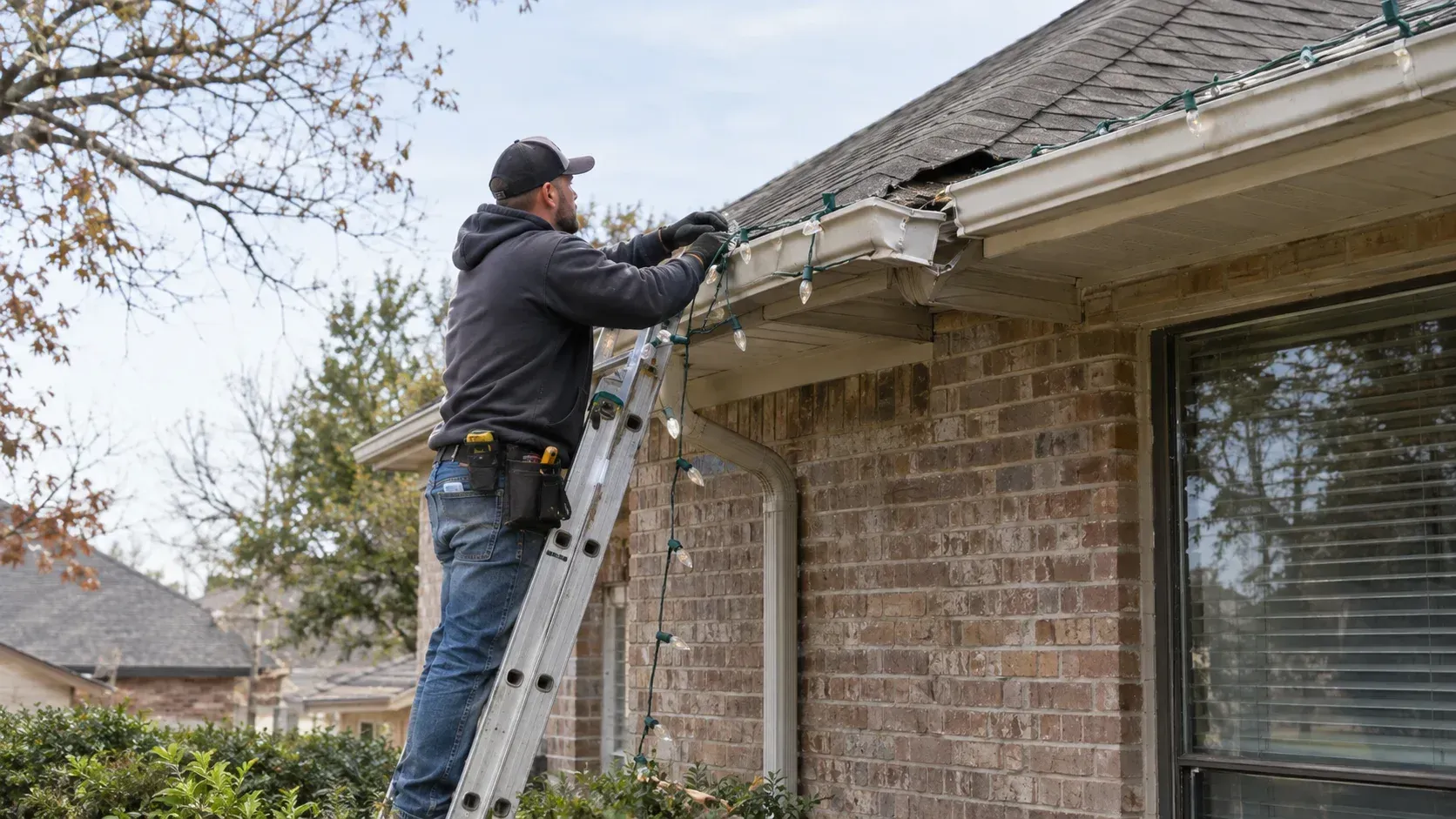
Professional installers determine attachment point spacing based on strand weight, wire gauge, and expected temperature range. This calculation ensures that no section of wire between attachment points carries more weight than the clip and wire material can support without sagging.
Using Tensioning Techniques During Installation
Rather than simply clipping a strand and moving to the next point, professional installation often involves applying slight tension during attachment, anticipating that materials will settle slightly over the following days. This proactive tensioning compensates for the natural settling that occurs after installation.
Selecting Appropriate Clip Types for Each Surface
Different roof and gutter materials require different clip designs to maintain secure, even attachment. Professional installers typically carry multiple clip types and select the appropriate one for each specific attachment point, rather than using a single generic clip type throughout the installation.
Common DIY Installation Mistakes That Cause Sagging
Using Too Few Attachment Points
The most common DIY mistake is spacing attachment points too far apart, often to save time or materials. While this might look fine initially, the extended unsupported sections between clips are where sagging becomes most visible as the season progresses.
Installing Lights Too Tightly
Some DIY installers overcorrect by pulling lights extremely tight during installation, assuming this will prevent sagging. However, overly tight installation creates excessive stress on the wire and connectors, which can lead to different problems including wire fatigue and connector separation, particularly as temperatures drop and materials contract.
Using Incorrect or Generic Clips
Generic, one-size-fits-all clips purchased from general hardware stores often don't match specific roof or gutter profiles precisely. This mismatch means clips may not grip as securely as material-specific designs, contributing to gradual slippage and sag over time.
Not Accounting for Temperature Changes
Installing lights on a mild December day without considering how the strand will behave during colder nights or unexpected temperature swings is a common oversight. Materials that fit snugly during installation may behave differently as temperatures fluctuate throughout the season.
The Role of Temperature in Strand Behavior
How Cold Affects Wire and Plastic
Most light strand wire and plastic clips are designed to handle moderate temperature ranges, but significant cold can cause materials to contract slightly, while warmth causes expansion. In North Texas, where temperatures can swing significantly between day and night during winter months, this expansion and contraction cycle affects strand tension repeatedly throughout the season.
Why Temperature Swings Matter More Than Constant Cold
A consistently cold climate allows materials to settle into a stable contracted state. North Texas instead experiences repeated temperature swings, sometimes dropping to freezing overnight and rising to 60 degrees Fahrenheit or higher during the day. This repeated expansion and contraction cycle puts more cumulative stress on materials than consistent cold would, which is part of why installation technique matters significantly in this region.
Professional Installation's Temperature Considerations
Professional installers familiar with regional climate patterns typically account for expected temperature ranges when determining tension and attachment spacing, building in appropriate slack or tension to accommodate expected material movement throughout the season.
Material Differences That Affect Durability
Wire Gauge and Flexibility
Heavier gauge wire holds its shape better under load but is less flexible for routing around complex roof features. Lighter gauge wire is easier to work with but sags more readily under the same weight distribution. Professional installation often involves selecting strand types appropriate for specific application areas based on these material characteristics.
Clip Material Considerations
Plastic clips vary significantly in quality and temperature resistance. Lower-quality plastic becomes brittle in cold weather and can crack or lose grip strength, contributing to strand slippage. Professional-grade clips are typically designed to maintain flexibility and grip strength across a wider temperature range. Clean, well-maintained gutters from regular gutter cleaning also provide a more secure attachment surface for clips compared to gutters clogged with debris.
Bulb Weight and Distribution
LED lights are significantly lighter than traditional incandescent bulbs, which affects how much sag develops over a given strand length. Installations mixing bulb types or using heavier incandescent strands require more attention to attachment point spacing than lighter LED installations.
Weight Distribution and Attachment Spacing
Calculating Load Per Attachment Point
Each attachment point along a light strand supports the weight of wire and bulbs between it and the adjacent attachment points. Professional installation typically involves calculating this load to ensure clips and the wire itself aren't carrying more weight than they're designed to support without stretching or sagging.
Why Gutter and Roofline Length Matters
Longer runs along gutters or rooflines require proportionally more attachment points to maintain even tension throughout. A common DIY mistake is using the same spacing regardless of run length, which can result in excessive sag concentrated in longer sections.
Corner and Transition Point Considerations
Areas where light strands change direction, such as roof corners or gutter transitions, experience different stress patterns than straight runs. These transition points often benefit from additional attachment support that DIY installation sometimes overlooks, leading to visible sag concentrated specifically at these transition areas. Homes with older or damaged gutters may also benefit from gutter installation assessment before the holiday season, since compromised gutter sections can affect how securely clips attach at these transition points.
What Typical DIY Advice Gets Wrong
Standard online guidance for installing Christmas lights frequently focuses on aesthetic placement while overlooking the structural factors that determine whether lights maintain their appearance throughout the season.
Generic advice rarely addresses attachment point calculations. Most guides suggest general spacing like "every few feet" without explaining how strand weight, wire type, and expected temperature affect appropriate spacing for specific situations.
Generic advice doesn't distinguish between clip types for different surfaces. Guidance often treats all roof and gutter attachment points the same way, missing that aluminum gutters, vinyl gutters, and different shingle types each benefit from different clip approaches.
Generic advice underestimates the cumulative effect of North Texas temperature swings. Most guides are written without regional climate consideration, missing that temperature variability in this area creates more material stress than consistently cold climates.
Generic advice doesn't address the difference between initial appearance and multi-week durability. DIY installers often judge their work immediately after installation rather than considering how it will look and perform several weeks later, which is when sagging typically becomes most apparent.
| Factor | Professional Installation | Typical DIY Installation |
|---|---|---|
| Attachment point spacing | Calculated based on strand weight and material | Often estimated or evenly spaced without calculation |
| Clip selection | Matched to specific roof/gutter material | Frequently generic, one-size-fits-all |
| Temperature consideration | Accounts for regional seasonal swings | Rarely considered during installation |
| Tensioning technique | Applied proactively during installation | Often skipped or applied inconsistently |
| Equipment used | Professional-grade tools and materials | Varies widely based on what's available |
| Insurance/liability | Typically covered by installer's policy | Homeowner assumes responsibility |
This comparison doesn't suggest that DIY installation is impossible to do well. Rather, it highlights the specific knowledge and calculation that professional installation typically incorporates, which homeowners can also apply if they understand these factors before beginning their own installation. Many homeowners also schedule house washing before the holiday season to ensure their home's exterior looks its best as a backdrop for festive lighting.
Conclusion
Professionally installed Christmas lights stay taut because installers calculate attachment point spacing, select appropriate clips for specific materials, apply proper tensioning during installation, and account for regional temperature patterns that affect material behavior throughout the season. DIY installations often sag because these calculations and considerations aren't part of typical light-stringing approaches, leading to insufficient attachment support and material stress that becomes visible as weeks pass.
Understanding the physics behind strand tension, including weight distribution, temperature effects, and material characteristics, helps homeowners in Mansfield, Grand Prairie, and Greater Dallas make informed decisions about their holiday lighting approach. Whether choosing professional installation for its calculated precision or applying these principles to improve DIY technique, recognizing why sagging occurs is the first step toward lights that maintain their appearance throughout the entire holiday season.
Questions About Keeping Your Holiday Lights Looking Their Best?
If you're planning holiday lighting for your home and want to understand what approach will keep your lights looking taut and professional throughout the season, discussing your specific roofline and gutter situation can help clarify the best options.
If you'd like to learn more about installation techniques, discuss your home's specific lighting needs, or if you'd like to
contact us about professional Christmas light installation that stays taut from November through January, we're happy to answer your questions and help you plan ahead for the season.
Frequently Asked Questions
How much more does professional installation typically cost compared to DIY?
Professional Christmas light installation costs vary based on home size and roofline complexity, but generally range from $300-800 for a typical single-family home, compared to the $50-200 cost of purchasing DIY lights and materials. The difference often reflects labor, equipment, and calculated installation technique.
Can I fix sagging lights after they've already been installed?
Yes, in many cases. Adding additional attachment points in sagging sections, or re-tensioning the strand at existing clips, can improve appearance mid-season. However, this requires returning to the roof or gutter area, which carries the same safety considerations as original installation.
Do LED lights sag less than traditional incandescent lights?
Generally yes, because LED strands are typically lighter in weight than incandescent strands of the same length. Lighter weight means less gravitational pull between attachment points, though proper spacing still matters regardless of bulb type.
Does gutter material affect how much lights sag?
Yes. Vinyl gutters can become more brittle in cold weather, potentially affecting clip grip, while aluminum gutters maintain more consistent attachment characteristics across temperature ranges. Clip selection appropriate to your specific gutter material helps address this difference.
Is it worth replacing clips mid-season if I notice early sagging?
If sagging becomes noticeable early in the season, addressing it with additional or different clips can prevent the problem from worsening as temperatures continue to fluctuate. Early intervention is generally easier and less risky than waiting until significant sag or strand separation develops.
Recent Posts